Banner
The Engelbart Archive Historic Legacy 0Overview 1Welcome to "Living History" - the main portal to the Doug Engelbart Archive Collection and Virtual Exhibits. Who was Doug Engelbart, and how did he impact our lives for years to come? According to a recent article in the NY Times: "Douglas C. Engelbart [was] a visionary scientist whose singular epiphany in 1950 about technology's potential to expand human intelligence led to a host of inventions — among them the computer mouse — that became the basis for both the Internet and the modern personal computer" Here you can learn about Doug and his research team's many accomplishments, as told through considerable archive records spanning decades of prolific pioneering visionary pursuit. This comprehensive collection of historic texts, photos, video footage, anduil artifacts is curated across multiple institutions. Refer to the Table of Contents (left panel) to browse by media type, by institution, and the stories and exhibits of his vision, his pioneering firsts and more. 1a For a quick tour of these Archives, watch Learnings from a Life's Work: The Doug Engelbart Archives – a 20-minute overview by Executive Director and daughter Christina Engelbart highlighting (1) Doug's seminal work, (2) this archive initiative, and (3) how that work informs next-generation information technology – presented at the Internet Archive's 2011 Conference on Personal Digital Archiving. 1b Online Exhibits 2Story of a True Pioneer 2aWatch the video tribute below for a brief overview of Doug Engelbart's pioneering work. See also A Lifetime Pursuit for a short biographical sketch of his career – his vision, inspiration, accomplishments, and strategic approach – how and why he did it all. For more, check out his Oral Histories by the Computer History Museum, the Smithsonian, and Stanford University Special Collections.
Pioneering Firsts 2bDoug Engelbart is credited with "demonstrating the power and the potential of the computer in the information age." Most of his epic technological firsts were in full operational use within his research lab by the mid to late 1960s, through a unified system called NLS. NLS was continuously evolved, along with his team's processes and thinking, following Doug's design strategy – one of his little known organizational firsts – a customer-centered, rapid-prototyping 'bootstrapping strategy' for 'augmenting the human intellect' within and across organizations. All this was in the service of prototyping the high-performance organizations and teams of the future. For a brief overview, see above Story of a True Pioneer.
Visit our NEW! Gallery of Firsts
to
Recently we celebrated several Epic Firsts milestone anniversaries, such as
For a quick tour of exhibits at other institutions see Special Collections by Institution below including: ♦ Smithsonian ♦ Computer History Museum ♦ Stanford University and ♦ SRI International. For a bulleted list of just technological firsts, see A Lifetime Pursuit section on Pioneering Firsts. What's in the Archive? 3Photos 3a
Videos 3b
Oral Histories 3c
Equipment 3d
Texts 3e
Slides 3f
Software 3g
Early Websites 3h
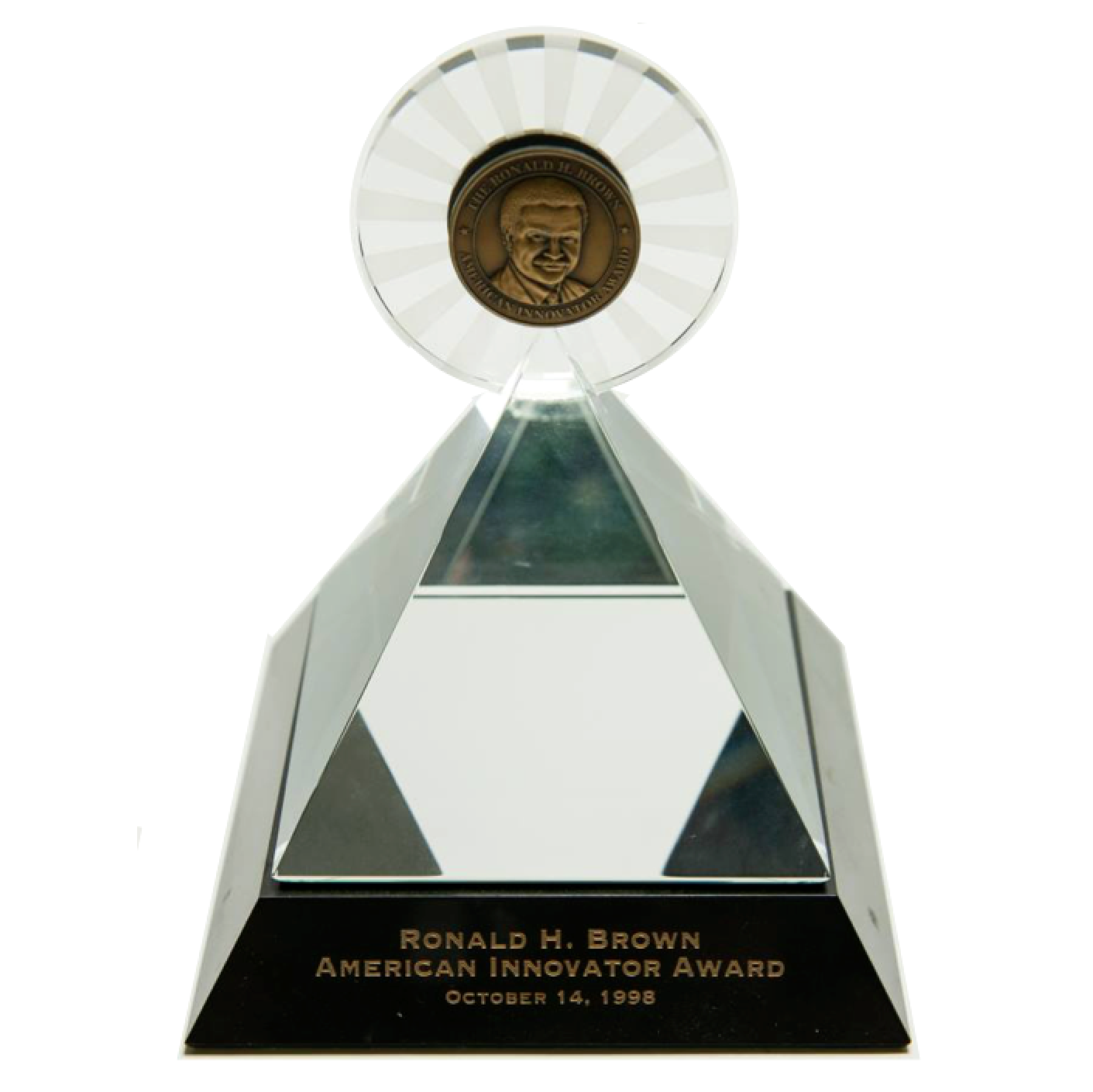
Awards 3i
Events 3j
Special Collections by Institution 4Doug Engelbart Institute 4aThe Doug Engelbart Archive, our main portal into Doug's archives, as well as the following selections on the main menu of our website: About | About Doug, History, Library, Press | Press Clippings. Special subcollections include stories of pioneering firsts such as the mouse, the 1968 demo, interactive computing, groupware, hypermedia, networking, Vannevar Bush's influence on Doug's work and other pioneers of the information age, and the strategic approach from which all of it emerged. We are currently processing all his work materials (50 years worth) from his home. See also the Doug Engelbart Institute on Facebook and ARC Bootstrapper on Facebook for more photos and postings. Stanford University 4bStanford University Special Collections at Green Library are curators of the comprehensive MouseSite and the extensive Douglas C. Engelbart Papers (about 1/3 of his total archives) including the majority of Engelbart's lab notes, memos, proposals, reports, articles, meeting records, mouse patent, archival film, video footage, audio tapes, and photos -- and online "MouseSite" Demo page (excellently annotated!), Archives portal, Original Finding Aid and Contents and more; video archives of the 1998 event Engelbart's Unfinished Revolution and the 2000 Engelbart's Colloquium at Stanford, the Engelbart Oral History Interviews (above), and the Silicon Valley Archives where you will find the Douglas C. Engelbart Papers, 1953-1998 (see our Stanford Collections portal for additional details). See also related collections of key Engelbart colleagues who contributed significantly to his research: the Jeff Rulifson Papers and the Charles H. Irby Papers at Stanford Computer History Museum 4cDoug Engelbart's work is featured in several exhibits at the Computer History Museum in Mountain View, CA, all viewable online:
(1) In the "Revolution" Exhibit under three topic areas: (2) In the Internet History Exhibit you can find Engelbart's lab on the Internet History Timeline: 1969; and (3) In the CHM Hall of Fellows you can find Engelbart's 2005 Fellow Award. The CHM Archive also curates considerable hardcopy Engelbart archives (about 1/3 of his total archives) including documents, notes, and records from Engelbart's historic Augmentation Research Center (ARC) at SRI, and from the Network Information Center which launched in his lab. For details see the comprehensive Finding Aid compiled by Jake Feinler with Harvey Lehtman, a guide to the SRI ARC Journal, as well as the CHM Oral Histories of Doug Engelbart (above) and Jake Feinler (102702199). See also related collections of key Engelbart colleagues who contributed significantly to his research: the Jeff Rulifson Papers. CHM is also home to the Software Preservation Project.
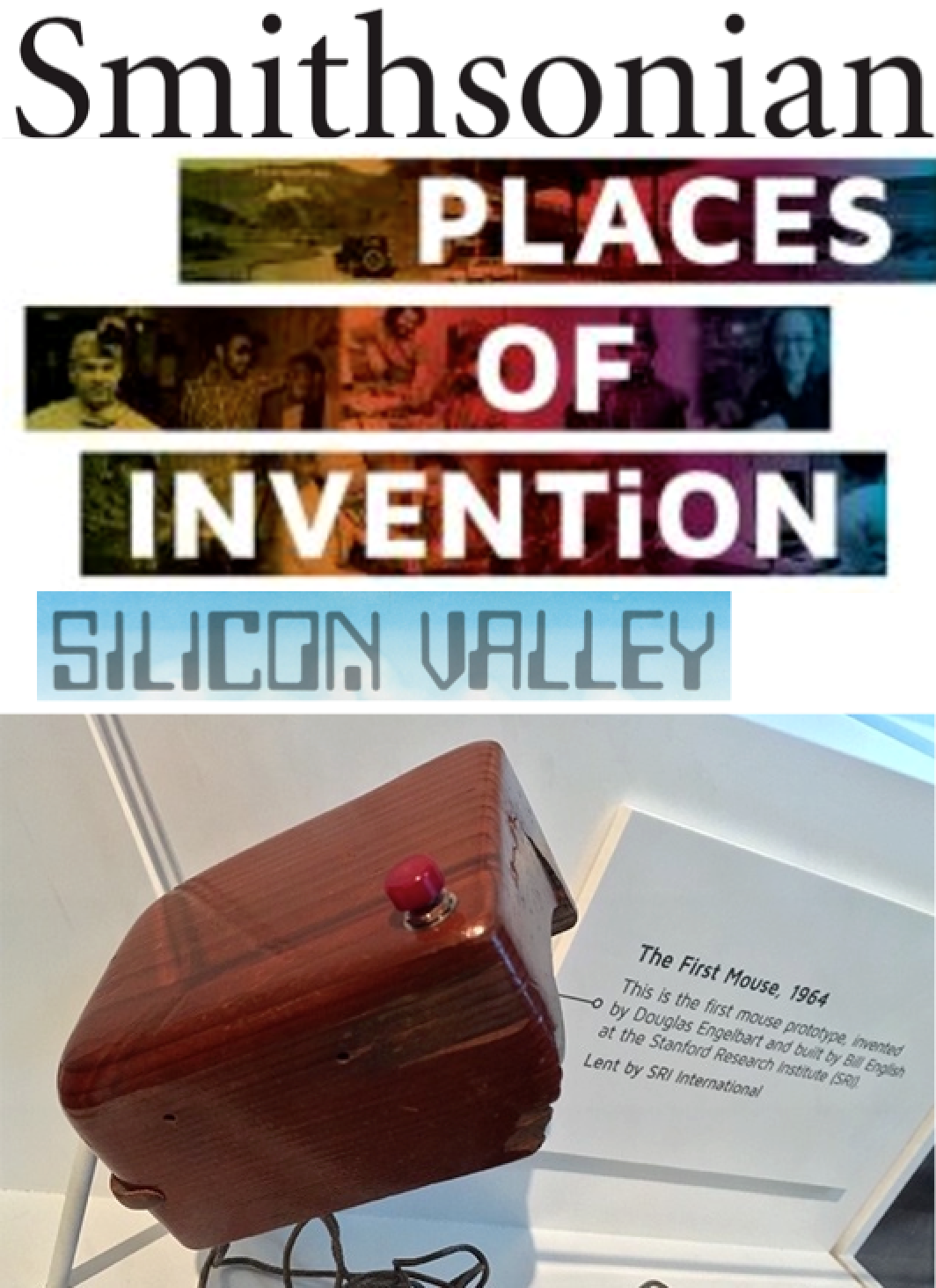
Smithsonian Museum 4dThe original wooden mouse was on exhbit at the Smithsonian's National Museum of American History (2015-2023), in their Lemelson Hall for Invention & Innovation, as part of an exhibit titled Places of Invention. See our Photo Gallery and our On Exhibit:Smithsonian showcase for more. The museum also curates the Douglas Engelbart Oral History (above) taken as part of their Computer History Collection; excerpts from Doug's 1968 Demo were also showcased in their award-winning Exhibit on the Information Age. SRI International 4eSee commemorative event Engelbart and the Dawn of Interactive Computing, Timelines of Innovation including The Beginning of the Global Computer Revolution, The Computer Mouse and Interactive Computing, The ARPANET, the 1968 Mother of All Demos, SRI Gibson Achievement Award, SRI Alumni Hall of Fame, Video Highlights of the 1968 Demo, Remembering Doug Engelbart. Ninety percent of the historic photos of Doug's work are courtesy SRI Internatioal. as well as all footage from the 1968 Demo. Internet Archive 4fThe Doug Engelbart Video Archives are hosted at the Internet Archive collection. Also selected texts, including 1995 seminar courseware Wikipedia 4gArticles covering Doug Engelbart and his work on Wikipedia include: Douglas Engelbart | Augmentation Research Center | Computer Mouse | Mother of All Demos | NLS | Network Information Center | ARPANET | Collaborative Software | Graphical User Interface | Hypertext | Intelligence Amplification Plan Your Visit(s) 5On Exhibit 5aSee our On Exhibit portal with links to brick and mortar exhibits you can visit (or once could). Hit the Stacks 5bPeruse the Special Collections section above for links to brick and mortar archive collections you can visit, with links to their respective Finding Aids - note archives are typically stored off site, you'll need to request specific boxes in advance of your visit. Feel free to This e-mail address is being protected from spam bots, you need JavaScript enabled to view it at the Doug Engelbart Institute for guidance on your area of interest. About the Engelbart Archive Initiative 6The Doug Engelbart Archive Collection documents the life's work, vision and accomplishments of Doug Engelbart. This is an ongoing initiative of the Doug Engelbart Institute, in collaboration with SRI International, Sun Labs, Internet Archive, and distinguished volunteers from Doug's alumni group, to preserve for historic interest, and to inform a next generation. The initial thrust of this Initiative has been to gather, sift through, catalog, digitize, and upload archival documents, video footage, photos, and digital files for preservation and broad-based accessibility, and to provide context through exhibits, stories and articles. We are currently working with 2,000+ digitized historic photos, 150+ digitized video tapes, plus dozens of digitized papers. This work complements the existing comprehensive collections at Stanford University Libraries Special Collections, and the Computer History Museum. 6a To get a flavor of what it's like to piece together the context and stories hidden in the subtexts of a massive archive collection, see Christina's blogpost A Day in the Life of a Personal Archivist, as well as Tim Lenoir's Final Report on the Stanford MouseSite Project. 6b |

VIEW buttons help you navigate:
Outline offers a bird's eye view; Numbers and Labels show hotlinks you can click to Jump to, or right click to Copy Link to; Numbers show where you are. Learn more.
Outline offers a bird's eye view; Numbers and Labels show hotlinks you can click to Jump to, or right click to Copy Link to; Numbers show where you are. Learn more.
|
|


 The original mouse